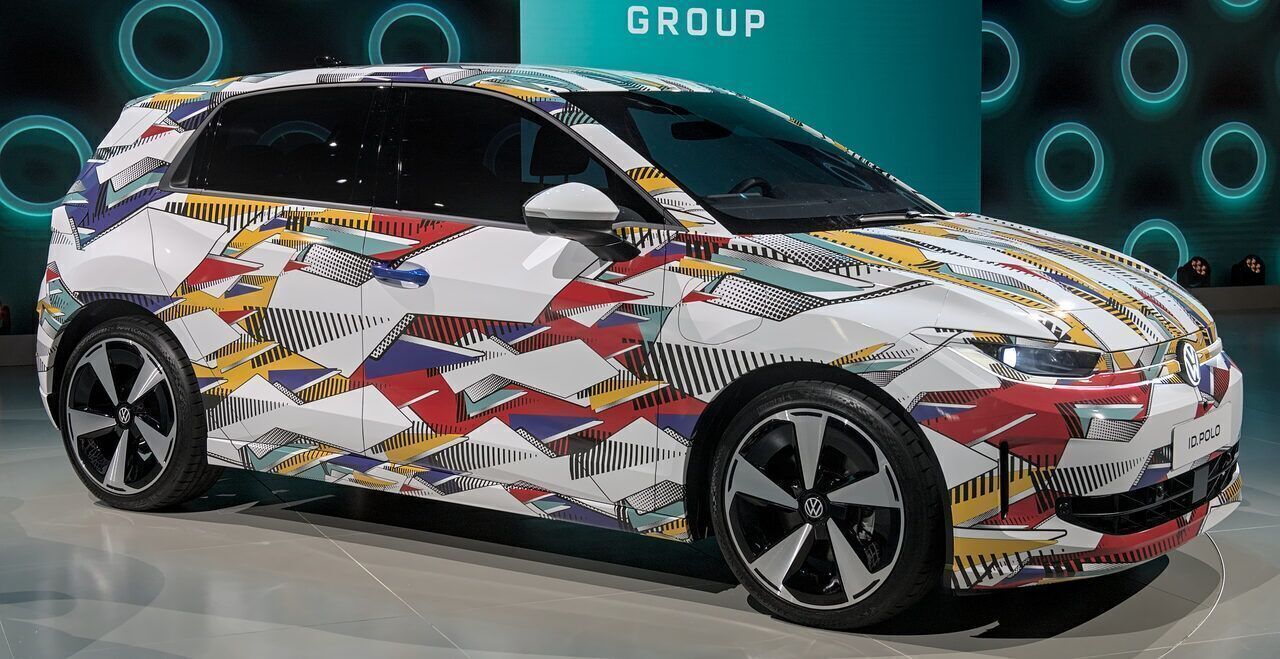
Volkswagen ID. Polo (2026) specs, price, ratings and reviews
Volkswagen's entry EV on the Entry platform, in production since June 2026 in Pamplona, Spain.
from € 24,990
Category scores
Specifications
- Generation
- MEB Entry, 155 kW / 51,7 kWh (2026-)
| Body style | Hatchback |
|---|---|
| Seats | 5 |
| Doors | 5 |
| Range (WLTP, km) | 454 |
| Battery capacity (kWh — larger = longer range) | 51.7 |
| Power (hp) | 211 |
| 0–100 km/h (seconds) | 7.1 |
| Top speed (km/h) | 160 |
| Length (mm) | 4,053 |
| Width, excl. mirrors (mm) | 1,816 |
| Height (mm) | 1,530 |
| Kerb weight (kg) | 1,576 |
| Fast charging, public charger (kW, peak) | 105 |
| Towing — braked (with trailer brakes) (kg) | 1,200 |
| Boot (l) | 441 |
| Consumption (WLTP, kWh per 100 km — lower is better) | 13.3 |
Fast charging at a public charger (10→80%)
| Charging situation | 10→80% (minutes) |
|---|---|
| At the car's own maximum charging rate (105 kW) | ~ 33 |
| At a 150 kW charger | ~ 33 |
| At a 50 kW charger | ~ 70 |
Charging at home uses AC power and is slower: a home wallbox typically delivers 7.4 to 11 kW. That is separate from the fast-charge times shown above.
More on this: fast charging in practice, public charging and charging passes.
Frequently asked
What does the Volkswagen ID. Polo cost roughly?
Indicative starting price € 24,990 (reference date 2026-07-18). Not an offer.
What is the WLTP range of the Volkswagen ID. Polo?
454 km WLTP (manufacturer figure). Owners typically report less in everyday driving, especially in cold weather. See the reviews below.
How much can the Volkswagen ID. Polo tow?
1200 kg braked (with trailer brakes) — the figure that applies when your trailer (such as a caravan) has its own brakes. Manufacturer figure; the exact, binding limit for a specific car is on its registration document.
How long does fast-charging the Volkswagen ID. Polo take (10→80%)?
Roughly 33 minutes on a 105 kW charger (10→80%, factory calculation, indicative). Actual time depends on battery temperature and the charging curve — the car's charging speed drops as the battery fills.
How big is the battery in the Volkswagen ID. Polo?
51.7 kWh usable capacity (manufacturer figure). Check the warranty terms of the specific car for capacity retention.
What does the Volkswagen ID. Polo use in real-world driving?
The factory WLTP figure is 13.3 kWh/100 km. Owners typically report more in mixed use, with the usual winter penalty. See the owner experiences below.
How much boot space does the Volkswagen ID. Polo have?
441 litres (manufacturer figure). See the spec sheet for the full dimensions.
Owner experiences
No owner has written in about this one yet. If you drive it, yours would be the first. Write the first owner review.
In depth
Five-door B-segment hatchback with front-wheel drive. The specs above belong to the 155 kW version with 51.7 kWh net battery: WLTP up to 454 km, DC charging up to 105 kW and 10-80% in 24 minutes (manufacturer figure, indicative). Boot 441 litres, braked towing weight 1,200 kg. The indicative Dutch starting price is 24,990 euro and applies to the 37 kWh entry version with up to 329 km WLTP, so not to the 51.7 kWh version listed here. A starting price, not an offer.
About the Volkswagen ID. Polo (2026)
Independent spec and rating reference. No offers, no sales.
The ID. Polo is Volkswagen's entry-level EV on the MEB Entry platform, a shortened and simplified MEB variant. Five-door hatchback in the B segment, motor at the front and front-wheel drive. Production has been running since June 2026 at Volkswagen Navarra in Pamplona. The Polo name also stays in use for the petrol car; that is a separate model on a different platform with its own entry.
In practice
Two battery sizes are on the price list. Volkswagen states up to 329 km WLTP for the 37 kWh entry version and up to 454 km for the larger pack (manufacturer figure, not measured by us). The figures in the spec table belong to that larger version: 51.7 kWh net out of 56.0 kWh gross, 155 kW or 211 hp, 290 Nm, 0-100 in 7.1 seconds and a 160 km/h top speed. WLTP consumption is 13.3 kWh/100km in the most favourable band and 14.6 kWh/100km in the least favourable one (manufacturer figure). DC charging peaks at 105 kW and 10-80% takes 24 minutes under favourable conditions; at home it charges at 11 kW AC. Boot 441 litres with the rear seats up, 1,240 litres folded, no frunk. Braked towing weight 1,200 kg, unbraked 750 kg. Kerb weight 1,576 kg. The indicative starting price in the Netherlands is 24,990 euro including VAT and registration tax (recommended consumer price, Volkswagen Netherlands, reference date 18-7-2026). That price belongs to the 37 kWh entry version, not to the 51.7 kWh specs listed here. A starting price, not an offer and not a forecast.
Points to note
For the 37 kWh versions Volkswagen notes that the figures are provisional pending final EU type approval; check them in the configurator before giving them much weight. Power, acceleration and charging peak for that entry version have not been officially published, which is why they are absent here. The MEB Entry platform is new, so long-term reliability and residual value are by definition undocumented; those ratings sit on insufficient data. Watch the name confusion while searching: the petrol Polo is a different model with its own entry. The available photo shows a camouflage-wrapped show car from IAA 2025, not the production version.
Related models
No tax or financial advice. Every figure shows its source and reference date. Always compare with an independent adviser and the official source. Source: OEM datasheets + RDW + ADAC (see methodology); rating and price reference dates are listed per figure.