Guides · EV
Public charging: the terms around charge card, AC and DC
Charge card, kWh tariff, start fee, AC versus DC, the difference between charger power and what the car draws. The terms around public charging explained, without tariff comparison or advice.
We list no dealers and sell nothing. We put the numbers side by side; the choice stays yours.
Reference date May 2026 Policy and rates change — always check the official source.
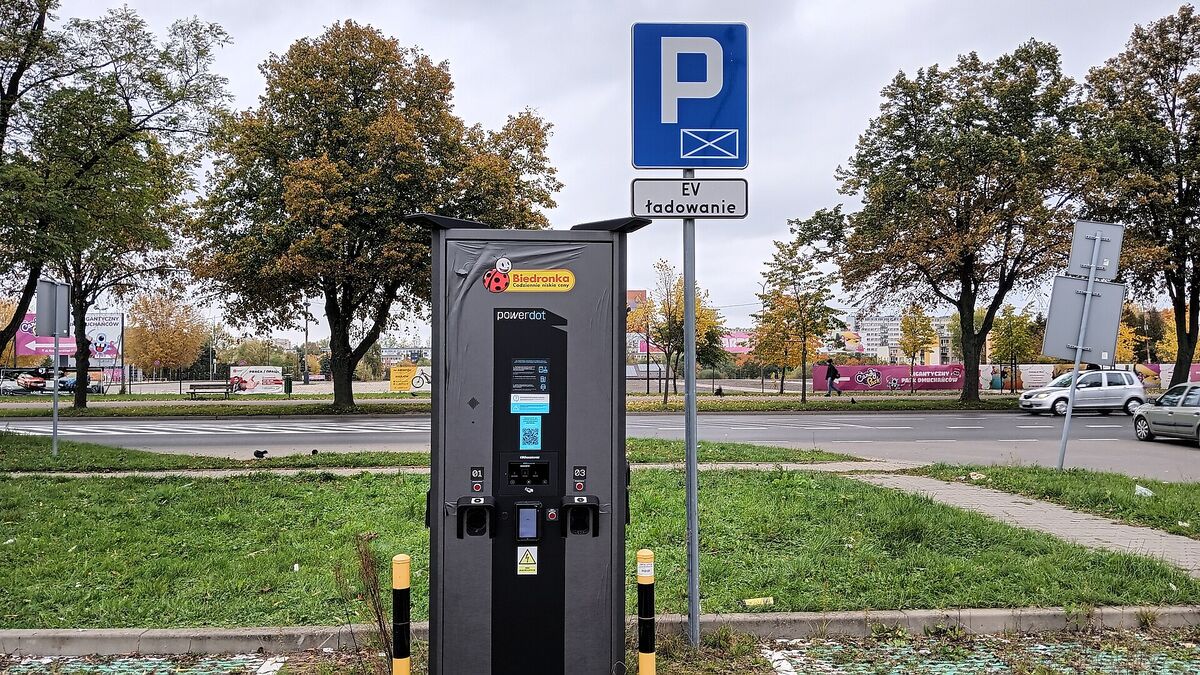
Public charging has its own vocabulary that is separate from the car: charge card, AC, DC, charger power, start fee. This guide explains those terms so you can read a spec sheet and a charge point. We compare no tariffs and give no advice.
Charging at home is not mandatory. A fixed charge point (wallbox) is the most convenient, but most electric cars (EVs) also charge from an ordinary wall socket — more slowly, often around 2–3.7 kW (manufacturer figure, varies per version). Whether a home charger fits depends on your own parking situation. We give no advice here; the right setup differs per person.
AC and DC: where the limit sits
- AC charging (alternating current) runs through the car’s onboard charger. The charging speed is limited by the lowest of three values: the charger power, the connection, and the maximum AC charging capacity of the car itself (often 7.4 or 11 kW, sometimes 22 kW; factory figure, varies per variant). A 22 kW charge point does not charge a car with an 11 kW onboard charger faster than 11 kW.
- DC charging (direct current, fast charging) bypasses the onboard charger and goes straight into the battery. Here the car’s charge curve and the charger power apply; the peak figure in kW is rarely held for long (see the separate guide on 10-80% versus peak power).
The figure that counts for a charging session is therefore not the charger power alone, but the minimum of charge point, connection and car.
A practical example without invented exact figures: a common public AC charge point often delivers around 11 kW per connection, sometimes 22 kW. A car with an onboard charger of 7.4 kW charges at both points at 7.4 kW; the extra charger capacity is lost. Conversely, a car with a 22 kW onboard charger reaches that capacity only at a charge point and connection that deliver 22 kW three-phase. The phases count: single-phase charging is typically around 3.7 kW, three-phase higher (factory figure onboard charger; grid connection location-dependent). This explains why two cars at the same charge point can show very different charging times.
What a charge card and the tariff are
A charge card or app authorises the session and handles the billing; the card belongs to a charging service, not to the charge point. The tariff usually consists of a price per kWh and sometimes a start fee or a time component, and can vary per service, charge point operator and moment (public tariff information from the providers; highly variable, no fixed figure). We deliberately publish no tariff comparison: prices change too fast and per card, and a snapshot would suggest false precision.
Besides the card there is ad-hoc charging: paying without a subscription, often via a QR code or payment card at the charge point. That tariff is usually higher than via a charging-service subscription, but that too varies per operator and moment (public tariff information from the providers; variable). Roaming also plays a role: charging with one card at charge points of other operators can carry a surcharge. These are terms, not figures we pin down; anyone who wants a concrete tariff checks their own charging service at the moment itself.
Charge point density as context, not a ranking
How many public charge points are in a municipality is publicly available via open charge point data. That is background context for electric driving, not a measure of charging speed or cost and not a buying signal. A high density says nothing about the power per charge point or whether it is free at the moment.
Plug types as a term
In Europe Type 2 is the common AC plug and CCS (Combined Charging System) the common DC plug; older or Asian models may use CHAdeMO for DC (factory figure, varies per model and year). The type determines which cable you need and whether a charge point can charge the car at all, but says nothing about the speed: the speed remains the minimum of charge point, connection and car. An adapter between incompatible DC systems is not a standard solution; that is case-by-case engineering, not a term we generalise.
What the car spec says about this
On the model page we show, where reliably stated: the maximum AC charging
capacity, the DC peak power, the plug type and, if available, a 10-80% time.
If a value is not reliably established, we show n.b. instead of a derived
estimate. We do not calculate charging cost or charging time “for you”; that
depends on charge point, tariff and moment, and a personal cost outcome falls
outside what this specs catalogue does. Charging behaviour in the cold is
related to range; more on that in the related guides and the tool.
Indicative, no buying or tariff advice. Charging speed is the minimum of charge point, connection and car; tariffs vary per service and moment.
Continue with the data: look at the electric models, calculate with the range-by-temperature tool or look up terms in the glossary.
No tax or financial advice. Every figure shows its source and reference date. Always compare with an independent adviser and the official source.